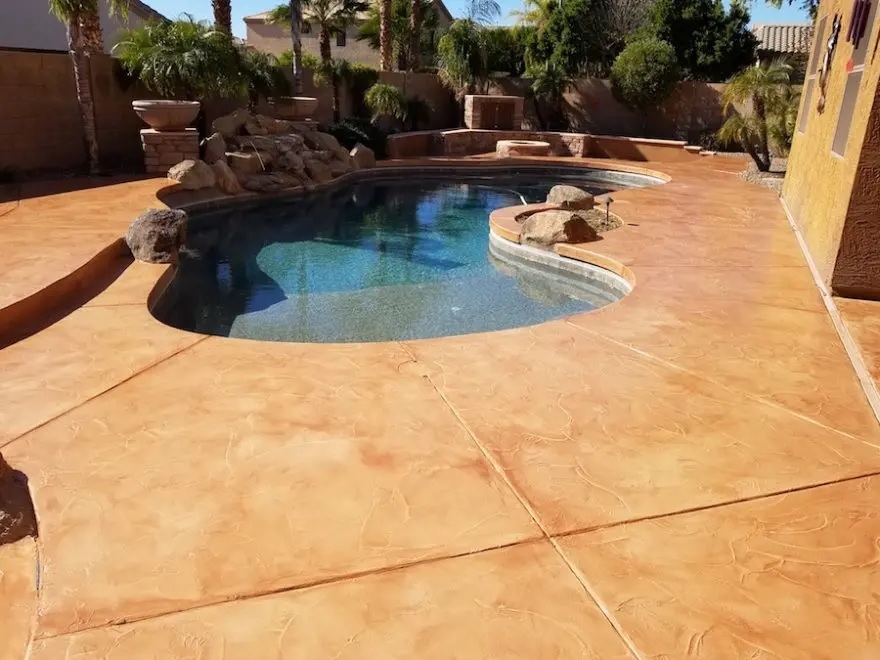
THE FOLLOWING IS INFORMATION FOR A KOOL DECK INSTALLATION.
THIS INFORMATION WILL GIVE YOU ALL YOU NEED BEFORE YOU MAKE YOUR FINAL DECISION ON AN INSTALLER.
KOOL DECK INSTALLATION INFORMATION FOLLOWS. JUST TO LET YOU KNOW THE BASIC REQUIREMENTS, BUT OF COURSE WE HAVE KEPT SOME OF OUR SECRETS, FROM THE LIST. THIS TYPE TECHNOLOGY FOR A KOOL DECK INSTALLATION MEETS ALL THE STANDARD REQUIREMENTS FOR AN EXCELLENT FINALIZED PROJECT.
Advanced Kool Deck INSTALLATION REQUIREMENTS–DESIGN PROVEN formula:
1. Functional design goals:
High solar reflectance (albedo): Use white binders + light, stable mineral pigments for radiative cooling.
Evaporative cooling via controlled porosity: Create a micro‑porous, capillary‑active matrix that can hold and release small amounts of water.
Low thermal inertia at the surface: Use lighter, lower‑density aggregates near the top to reduce heat storage.
Durable, pedestrian‑grade overlay: Maintain compressive strength and abrasion resistance suitable for pool decks and patios.
2. Advanced formulation (by weight % of dry solids): Base binder (≈45–50%)
White Portland cement (Type I or III): 30–35% Label: High reflectance, main hydraulic binder.
Titanium dioxide (TiO₂, rutile grade): 1–3% Label: Strong whitening, high solar reflectance.
Iron oxide pigments (buff, cream, light gray): 1–2% Label: Stable, UV‑resistant color; keep colors light to preserve albedo.
Aim for a creamy, trowelable slurry that can be broom‑finished or sprayed.
3. Application system.
Layering:
Primer coat:
Label: Thin slurry of white cement + acrylic (no lightweight aggregates).
Brush or spray onto clean, roughened concrete: let it become tacky.
Main overlay: (2–4 mm):
Label: Use full advanced mix above.
Apply with trowel or hopper gun: create texture (knock‑down, broom, or skip‑trowel).
Optional top wash:
Label: Very thin, high‑TiO₂, low‑polymer wash to maximize reflectance without sealing pores.
4. Cooling mechanisms in this formula.
Radiative cooling: White cement + TiO₂ + light pigments increase solar reflectance and long‑wave emissivity, lowering peak surface temperature.
Evaporative cooling: DE + lightweight aggregates create interconnected micro‑porosity that absorbs small amounts of water (from splashes, cleaning, humidity) and releases it via evaporation.
Reduced heat storage: Expanded clay/perlite reduce density and thermal inertia near the surface, so the deck heats up less and cools faster.
5. Why this stays as the most popular:
All components are NOW standard, widely known materials (white cement, lime, metakaolin, DE, expanded clay, TiO₂, generic acrylics).
WE ALSO PERFORM THE FOLLOWING SERVICES FOR A KOOL DECK.
We specialize in repairing and refinishing cracked, chipped, flaking or otherwise deteriorating concrete KOOL DECKS. Since the cost of removing and replacing an aging existing concrete deck can be prohibitive, our comprehensive swimming pool deck repair services are virtually guaranteed to save time and money.
Kool Deck Cleaning:
Kool Deck cleaning in Coachella Valley involves gentle cleaning with soap, water, and a nylon brush, or using a pressure washer with caution (low PSI) to avoid damaging the delicate, textured surface. Regular maintenance removes dirt and prevents stains, while professional services can address repairs.
Kool Deck Cleaning and Maintenance Tips: Cleaning Routine: Use strong soap, water, and a nylon bristle broom to scrub the surface, then rinse thoroughly with a garden hose. Pressure Washing: If using a pressure washer, use low pressure to avoid damaging the, often, 20-year-old, porous, cement-based surface. Stain Removal: For rust or stubborn stains, a mixture of water, dish soap, and household bleach can be used. Avoid harsh, acidic cleaners that can burn the material. Professional Services: Companies like the WILCOX Kool Deck Group specialize in cleaning and maintaining specialized, textured coatings. Inspection: Regularly inspect the deck for chipping or peeling, especially in high-traffic areas. Maintenance Precautions: Avoid High PSI: High-pressure washing can damage the coating. Surface Protection: Ensure the sealer is intact to protect the deck from stains, chemicals, and UV rays. Cleaning Frequency: In the Coachella Valley, high traffic and dust require more frequent cleaning.
OUR Professional Pool Deck Cleaning Services: WILCOX KOOL DECK GROUP, specializes in Dirt maintenance programs that will maintain the life of your pool deck and epoxy coatings. Stop replacing your pool deck every 3 years! Maintain your pool deck properly with power washing on a regular basis. Keep a grime free community by maintaining your most valuable assets. We can steam clean the exterior of your pool deck to keep it sanitized and germ free. Call US Today!
Pool Deck Cleaning Service Company:
Does your dirty pool deck stop you from enjoying your outdoor space? WILCOX specializes in pool deck pressure washing and cleaning services. We power wash pool decks all year long to keep them ready for swimming and entertainment! Proper exterior pool deck power washing can remove:
Dirt---Debris---Grime---Spillings---Stains---Dust---Bacteria---Bird Waste, to name just a few problems to naturalize.
FOR EXAMPLE:
Does your pool deck have calcium stains? Did you know that our COMPANY can also remove calcium buildup from your pool deck? We use our special "formula" to safely and effectively remove calcium deposits from your pool decking!
AND PLEASE DON'T FORGET US, BUT.....Here are some "Basic Tips" for the "DO IT YOURSELFERS"..........
Keeping a Kool Deck clean requires regular sweeping or leaf blowing (1-2 times a week) to remove debris, and gentle, regular cleaning with mild soap, water, and a soft-bristle brush. For stubborn stains or mold, use a mild bleach-based solution (half water/half bleach) or specialized cleaners, ensuring all cleaning agents are thoroughly rinsed off to prevent slick residue and protect surrounding plants. Key Maintenance and Cleaning Tips: Regular Maintenance: Sweep or use a leaf blower to remove debris, which prevents stains. Gentle Cleaning Solution: Use a mixture of water and soap or a mild deck cleaner for regular maintenance.
Protect Surrounding Plants: Thoroughly soak nearby vegetation with water before applying bleach solutions to prevent damage.
Pressure Washing: Use low pressure (roughly 220 PSI) with a wide fan tip only when necessary to avoid damaging the surface.
Resealing: Reseal the surface every 2–3 years to protect against UV rays and reduce grime accumulation.
Avoid Stains: Keep metal furniture off the deck, as it can create rust stains.
"Transform your UN-CLEAN concrete landscape into a stunning, durable resort-style deck. With our premium Kool Deck Cleaning Sanitary finishes, you’ll increase your property’s value while enjoying a cooler, more stylish KOOL DECK environment. Get the look of luxury that lasts for years. Call Vidales Kool Deck Services today, to schedule your transformation to a much cleaner and much more sanitary ENVIRONMENT and start living the real backyard dream"
CONTACT US AT......
Telephone: 760-269-5671
Email: wilcoxecv@gmail.com
Office: BERMUDA DUNES
WILCOX KOOL DECK GROUP IS A DIVISION OF WILCOX ENTERPRISES, A GENERAL CONTRACTOR IN THE COACHELLA VALLEY SINCE 1996.
BELOW, IS ALL THE DO IT YOURSELFERS PERTINENT INFORMATION, YOU WILL NEED, TO CREATE A MUCH BETTER ENVIRONMENT FOR YOUR KOOL DECK SURFACES.
OPTIONS AND ALTERNATIVES FOR YOUR KOOL DECK MAINTENANCE.
Swimming pools in Palm Springs, FOR EXAMPLE, are rarely covered in the summer because standard covers can cause excessive heat retention, making the water uncomfortably hot and promoting algae growth. While sun exposure does contribute to concrete deterioration over time, homeowners typically prioritize maintaining a swim-ready water temperature and manage surface wear through specialized coatings and regular maintenance. Reasons for Not Using Covers:
Water Overheating: In intense desert heat, a cover traps thermal energy, often raising water temperatures by 5–10°F. This can make the pool feel like a "tepid bath" and creates an ideal environment for bacteria and algae to thrive. Aesthetic and Lifestyle: Palm Springs is known for its outdoor lifestyle; covers are often seen as a "PITA" (pain in the neck) to manage daily and detract from the backyard's visual appeal.
Equipment Issues: Automatic pool cleaners (crawlers) can sometimes get tangled in or damaged by certain types of covers during their cleaning cycles. Managing Concrete Deterioration: Instead of physical covers, residents use other methods to protect the concrete surfaces (both the pool shell and the surrounding deck) from intense UV rays: UV-Resistant Coatings. Homeowners apply specialized pool deck resurfacing and cool-deck coatings that reflect sunlight, preventing the concrete from reaching scorching temperatures and reducing UV-driven cracking. Surface Sealing: High-performance sealants are used to block moisture and UV rays, which otherwise break down concrete polymers and cause the surface to become brittle or "dusty". Cooling Techniques: Some owners simply splash water on the deck or choose lighter-colored concrete (like white salt-and-pepper finishes) to naturally minimize heat absorption. Protecting a Kool Deck in Palm Springs requires a combination of regular maintenance to prevent UV degradation and active cooling strategies to handle the extreme desert heat. 1. Maintain the Protective Layer: Kool Deck is a specialized concrete topping that can eventually fade, crack, or lose its heat-reflective properties under intense UV exposure.
Reseal Regularly: Apply a fresh coat of clear acrylic or resin sealer every 2 to 4 years. High-quality sealers guard against UV damage and water penetration.
Resurface for Heat Reduction: If your current deck is still too hot, you can apply a specialized heat-reflective coating over it. Products can reduce surface temperatures by up to 30–38%.
Choose Light Colors: If you decide to repaint or resurface, opt for very light shades (whites, light grays, or tans). Darker colors absorb significantly more heat and will become much hotter to the touch.
2. Active Cooling & Shade: In the peak of a Palm Springs summer (110°F+), even treated surfaces can become uncomfortably warm. Add Temporary Shade: Use cantilever umbrellas, shade sails, or retractable awnings to keep direct sunlight off the most-used areas of the deck.
Use Water Misters: Installing a misting system along the pool perimeter can lower the surrounding air and deck temperature. Lightly misting the deck with a hose before use also provides immediate evaporative cooling.
Outdoor Rugs: Place light-colored, UV-resistant outdoor rugs in high-traffic walking paths or seating areas to provide a secondary barrier against the heat. 3. Cleaning and Care Avoid Harsh Chemicals: Use mild detergents and soft brushes for cleaning. Harsh chemicals or high-pressure power washing (above 1500–2000 PSI) can etch the surface and strip away protective sealers.
Remove Debris: Regularly sweep or hose off sand and dirt, which can act as an abrasive underfoot and wear down the deck's texture and color. COVERING THE KOOL DECK SURFACE: Heavy-duty canvas sheets can provide a temporary thermal barrier for concrete, but they are generally not the most effective solution for walking on surfaces in extreme Palm Springs heat. While canvas is breathable and rugged, it absorbs and traps heat over time.
For walking safely on concrete in triple-digit temperatures, consider these more effective alternatives. More Effective Cooling Solutions: Insulated Concrete Blankets. These are specifically engineered with multi-layer foam and R-values (thermal resistance) to block heat transfer significantly better than standard canvas.
Heat-Reflective Coatings. Specialized coatings like use advanced technology to reflect solar rays rather than absorbing them, potentially reducing surface temperatures by up to 20 degrees Fahrenheit.
Rubber Overlays. Products can be applied over existing concrete to drop surface temperatures from 125°F to a walk-friendly 85°F.
UV-Resistant Poly Tarps. If using a temporary cover, silver or light-colored UV-resistant poly tarps often perform better than dark canvas because they reflect more sunlight away from the surface. Drawbacks of Standard Canvas Heat Absorption: Traditional dark-colored heavy-duty canvas can become extremely hot to the touch itself.
Thermal Mass: Concrete has high thermal mass and will continue to hold heat even if covered later in the day. For the best results, any covering should be placed before sunrise to prevent the slab from heating up in the first place.
Breathability vs. Insulation:
While canvas allows moisture to escape (preventing "sweating"), it lacks the dedicated insulation layer found in professional curing blankets, which are a highly priced product. For example, a 20 foot by 20 foot section is about $700.00.
Are you looking for a temporary fix for a one-time event, or a permanent way to keep your patio walkable all summer? To keep a patio permanently walkable through the intense Palm Springs summer, the most effective solution is installing heat-reflective materials combined with permanent shade structures. In the desert, standard concrete can reach temperatures that cause burns, so selecting materials with a high Solar Reflectance Index (SRI)—which stay cooler by reflecting more sunlight—is essential. Top Permanent Walkable Materials: Cool-Deck (Kool-Deck) Overlays. A specialized concrete topping engineered to stay significantly cooler than standard concrete. It is slip-resistant and widely used for pool decks and patios in high-heat areas like the Coachella Valley.
Light-Colored Natural Stone. Travertine, limestone, and Arizona Sandstone are naturally denser and absorb less heat. Lighter shades like tan or cream reflect sunlight, making them more comfortable for bare feet.
Porcelain Pavers. These are non-porous and highly durable. Light-colored porcelain with a textured finish offers excellent heat resistance and slip safety for desert climates.
Rubber Stone. A flexible overlay made from recycled rubber that can be applied directly over existing concrete. It is inherently soft, slip-resistant, and remains much cooler than stone or concrete in direct sun. Essential Shade & Cooling Systems:
Material choice alone may not be enough during 110°F+ days. Integrating permanent structures is key: Insulated Patio Covers: Solid aluminum covers (like Alumawood) with insulated panels create a genuine thermal barrier, dropping the temperature of the floor beneath them by 15–20°F.
Louvered Roof Systems: These allow you to adjust the slats to block 100% of direct UV rays while still allowing hot air to escape upward.
Integrated Misting Systems: High-pressure misters built into the patio's perimeter or eaves can lower the ambient air temperature by up to 30°F through evaporative cooling. SO.....WHAT IS THE PROVEN ANSWER? Protecting a concrete floor in extreme desert heat like Palm Springs, FOR EXAMPLE, requires a multi-layered strategy focused on UV resistance, heat reflection, and regular maintenance.
1. Apply High-Performance Coatings. Standard epoxies often yellow or peel under intense UV and heat. Instead, use materials designed for extreme climates.
Polyurea & Polyaspartic: These are considered the gold standard for desert environments.
They are highly UV-stable (won't yellow), remain flexible during thermal expansion, and can withstand temperatures far above typical desert highs.
Heat-Reflective Coatings: Our excellent Products use infrared pigments to reflect sunlight. These can lower surface temperatures by 20–40°F, making the floor much more comfortable to walk on. 2. Strategic Color and Sealing: Opt for Lighter Colors. Dark colors absorb more heat, leading to higher thermal stress and cracking. Using lighter shades or titanium-dioxide white mixes can double the surface's reflectance.
Use UV-Resistant Sealers: Apply a high-quality, penetrating silane or siloxane sealer. These bond below the surface to block moisture and reduce heat absorption without creating a slick, film-like finish that can peel. 3. Structural and Environmental Protection.
Regular Resealing: The intense Palm Springs sun breaks down sealants quickly. Plan to reapply a fresh coat of sealer every 4 to 6 years, or more often if the area has constant direct exposure.
Add Shade Structures: Reducing direct sun exposure is the most effective way to lower surface temperatures. Installing pergolas, sail shades, or awnings can drop the floor's temperature by 15–20°F.
Moisture Control: Keep the area clean of debris and ensure proper drainage to prevent "concrete sweating" (efflorescence), which is worsened by high heat and humidity.
WHAT IS THE HISTORY OF MODERN KOOL DECK INSTALLATIONS AND TECHNOLOGY.
The history of modern Kool Deck installations spans over six decades, evolving from a highly specialized, climate-specific cementitious formula into advanced acrylic and hybrid polymer coatings. While "Kool Deck" is a proprietary trademarked product invented by Mortex in 1962, the term "cool deck" has expanded in modern industry language to describe any non-slip, heat-reducing pool deck overlay.1962:
The Invention of Keystone Kool Deck:
The swimming pool industry was revolutionized in 1962 when Max Deason, founder of Mortex Manufacturing in Tucson, Arizona, invented Keystone Kool Deck®. Before this invention, pool decks consisted entirely of standard broom-finished concrete or wood, which absorbed extreme heat and burned swimmers' feet.
The Secret Material: The original formula was a natural, cement-based overlay composed of ground marble aggregate, white cement, and iron oxide pigments. Because natural marble inherently resists heat retention, it lowered the surface temperature of concrete pool decks by approximately 20 degrees Fahrenheit.
The "Knock-Down" Texture: To create traction and minimize sun exposure, installers created a "splash" or "stipple" finish. They flung the wet mixture onto the deck and lightly smoothed it over with a trowel just as it began to set. This created flat peaks with recessed valleys—a design now known globally as a knock-down finish.
The Traditional Installation Era (1960s – 1990s)For decades, installing an authentic Kool Deck required impeccable timing and specialized masonry training.
The "Wet-on-Wet" Bond: True Kool Deck had to be applied directly onto freshly poured, uncured base concrete. This allowed the overlay and the concrete base to chemically cure together as one unified slab, protecting it against peeling.
High Failure Risks: Because it relied on the moisture of the fresh concrete, weather variables like humidity, wind, and clay soils could unevenly draw moisture out of the mix. If the timing was off by even an hour, the overlay would fail to bond, leading to extensive delamination and cracking.
The Shift to Acrylic Overlay Technology (Mid-1990s – 2000s)By the mid-1990s, the pool industry began shifting heavily toward acrylic concrete overlays. Acrylic products were created to solve the stressful installation constraints of traditional cementitious Kool Deck.
Post-Cure Flexibility: Unlike original Kool Deck, acrylic coatings could be sprayed onto existing, fully cured concrete weeks, months, or years after it was poured. This eliminated the time crunch of working with fresh concrete.
Enhanced Adhesion: Resins and polymer modifiers allowed the acrylic coating to mechanically grip older concrete slabs, dramatically reducing structural installation failures.
Simplified Coloring: Instead of mixing raw pigments into wet cement on-site, installers could apply a textured base layer and seal it with a colored, UV-resistant acrylic topcoat for absolute color uniformity.
Modern Installation and Technology Trends (Present Day)
Modern pool deck technology seamlessly balances the thermal performance of traditional materials with advanced chemical engineering.
Hybrid Cement-Polymer Formulas: Modern premium lines, such as a Company's Designer Colors, combine traditional heat-deflecting marble aggregates with performance polymers. This provides the superior coolness of old-school Kool Deck alongside the flexibility and crack resistance of modern systems.
Modern DIY & Sprayer Advancements: Historically applied with hand-held dash brushes, modern overlays are applied using high-efficiency hopper guns or commercial texture sprayers (such as Graco RTX systems). Retail-friendly DIY coatings, like Encore's COOL!, allow homeowners to mix water-based resins directly with local retail exterior paint, squeegee it on, and roll out a textured finish easily.
Stamping and Aesthetics: While the classic mottled-beige look defined the 20th century, modern "Kool Deck Elite" and micro-topping systems can be coupled with stencils and stamping technology. This allows the deck to safely mimic premium textures like travertine, slate, stone, or granite while retaining its signature heat-reflective properties.
THERE ARE NO MORE REAL SECRETS AND TECHNOLOGY ANYMORE, IN CREATING A BASIC FIRST CLASS KOOL DECK RESURFACING INSTALLATION. AND YES, THERE WILL ALWAYS BE A POSSIBILITY OF IT OCCURING, BUT WILL YOU PAY THE MUCH HIGHER EXTRA PRICE FOR A MINOR IMPROVEMENT?